For Workplaces
WORKPLACE · ALL EMPLOYEESNeurodiversity in the Workplace
What does neurodivergence actually look and feel like at work?
An accessible introduction to how autism and ADHD can shape everyday working life.
This presentation moves beyond a basic list of traits to explore the invisible demands that autistic and ADHD employees often face in the workplace.
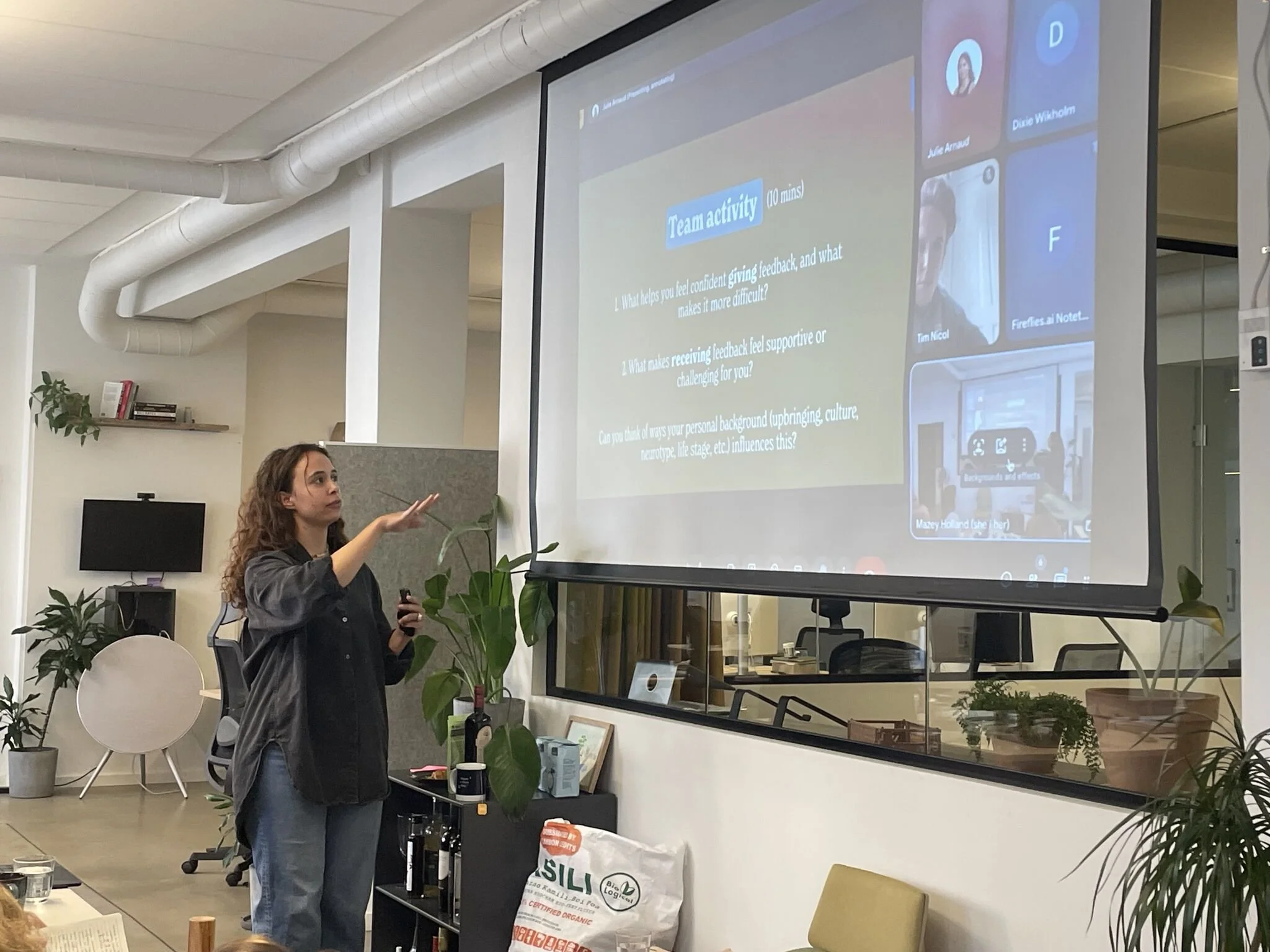
This talk gives the whole workplace a more nuanced introduction to neurodiversity, so we can better understand each other, work together with fewer misunderstandings and create a workplace where more people can thrive.
What participants will explore:
How autism and ADHD can shape everyday working life
Sensory, communication and social demands that may be invisible to others
The hidden effort behind ordinary workplace situations
Why the same diagnosis can look very different from person to person
The difference between outward capability and sustainable capacity
How clearer communication and fewer assumptions can support different ways of working

Best suited for:
Whole teams, employee groups, organisations beginning their neurodiversity work, awareness days, staff development.
WORKPLACE · Hr and managersSupporting Neurodivergent Employees in Practice
How can managers recognise strain, open the conversation and offer support to neurodivergent employees?
A neurodivergent employee can appear to be performing well while using a huge amount of energy to keep up.
Stress may show up gradually: difficulty responding to verbal information, increased withdrawal, reduced flexibility, or a sudden drop in capacity after a period of seeming “fine.”
This presentation helps managers look beyond visible performance and consider what may be happening underneath — including hidden effort, cumulative stress, workplace culture, and barriers to asking for support.
The session focuses on three practical areas: recognising where the workplace may be creating unnecessary strain, creating safer conversations around needs and disclosure, and supporting employees when capacity begins to change.
The aim is not to turn managers into specialists, but to give them a clearer framework for noticing, asking and responding.
What participants will explore:
How workplace culture, sensory demands, social expectations and unclear communication can create hidden strain
Why visible performance does not always reflect sustainable capacity
How managers can create safer, more open conversations around disability and support needs
Practical ways to check in when an employee is showing signs of stress or reduced capacity
How to explore accommodations collaboratively rather than expecting the employee to arrive with all the answers

Best suited for:
Managers, team leaders, HR professionals and others with responsibility for supporting or supervising neurodivergent employees
For Professionals
PROFESSIONALS SUPPORTING ND ADULTSLife after Late Diagnosis
How do you rebuild your understanding of yourself after a late diagnosis?
Receiving an autism or ADHD diagnosis later in life can offer an explanation for experiences that may have felt confusing for years.
A late diagnosis can change how someone sees their past, relationships, work, body, capacity and sense of self.
It may bring relief and validation alongside grief, confusion or anger. And because many people reach diagnosis after years of adapting, compensating or pushing through, the period afterwards may also involve discovering that old ways of coping are no longer sustainable.
This presentation explores the lived process that can follow late diagnosis, and how professionals can support people as they reinterpret their experiences, recognise changing needs and begin translating a diagnosis into something personally meaningful.
What participants will explore:
What can make receiving an autism or ADHD diagnosis in adulthood different from being diagnosed earlier
The identity shift that can follow diagnosis, including relief, grief, confusion and reinterpretation of the past
Changing capacity, burnout and reduced access to skills someone previously relied on
Masking, changing expectations and discovering what support is actually needed
How professionals can support gradual self-understanding without imposing another set of expectations
Practical ways to help someone translate diagnosis into personally meaningful and sustainable change
Best suited for:
Pedagogues, social workers, peer workers, teachers and other professionals supporting adults who have recently received, or are exploring, an autism or ADHD diagnosis.

PROFESSIONALS SUPPORTING ND ADULTSRecognising Autism and ADHD in Girls and Women
What can sit underneath a woman who appears capable, sociable and “fine”?
Many autistic and ADHD women spend years being understood through what other people can see: capable, sociable, conscientious, emotional, anxious, perfectionistic, overwhelmed.
What may be much harder to see is the amount of effort underneath.
Through lived experience and research, this presentation explores how masking, compensation and gendered expectations can make difficulties less visible, and how repeated stress, boundary difficulties or burnout may tell a different story from outward appearances.
The aim is not to teach professionals to diagnose, but rather to help them notice patterns that may otherwise be missed and ask better questions.
What participants will explore:
Why autism and ADHD in women are often missed, misunderstood or identified late
How masking, perfectionism and gendered social expectations can make difficulties less visible
How difficulties recognising, communicating and maintaining boundaries can affect work, friendships and relationships
Why repeated overwhelm or burnout may appear before neurodivergent needs are recognised
What professionals can listen and look out for while remaining curious rather than making assumptions
Best suited for:
Pedagogues, social workers, peer workers, teachers and other professionals supporting women with autism and or ADHD

Have a different topic in mind?
The presentations above are my established talks, but neurodivergence rarely fits neatly into four topics.
If your organisation has a particular question, audience or area you would like to explore, get in touch.
I can adapt an existing presentation or develop a session around a related topic where it falls within my areas of experience and expertise.

Lived experience meets professional practice
I’m Bella Neergaard, a late-diagnosed autistic and ADHD neurodiversity educator, facilitator and peer practitioner based in Copenhagen.
My work combines lived experience with professional peer practice, academic knowledge and storytelling to translate the less visible experiences of neurodivergence into something people can recognise, understand and relate to.
Booking and practical information:
Looking for practical information before making an enquiry?
Download my presentation guide for pricing, what is included, multi-session bookings, travel, cancellation terms and other practical information.
Interested in booking a presentation?
Tell me a little about your organisation, your audience and what you would like participants to take away from the session. If you're unsure which presentation would be the best fit, that's completely fine too.